
The Growing Dominance of Islamic Banking in Pakistan
Table of Contents
- The Growing Dominance of Islamic Banking in Pakistan
- Why Islamic Banking is Thriving in Pakistan
- Can Pakistan Achieve a Fully Sharia-Compliant Banking System by 2027?
- Islamic Banking Meets Sustainable Finance
- Meezan Bank's Performance Amid Economic Challenges
- Future of Islamic Banking in Pakistan
- The Rise of Islamic Banking in Pakistan
- Islamic Banking Growth in Pakistan (2015-2024)
- Can Pakistan Achieve 100% Sharia-Compliant Banking by 2027?
- Islamic Banking & Sustainable Finance
- How Islamic Banks Are Surviving Pakistan's Economic Crisis
- Pakistan's Key Economic Indicators (2023 vs. 2024)
- The Future of Islamic Banking in Pakistan
- Islamic Banking in Pakistan: Key Performance Indicators
Why Islamic Banking is Thriving in Pakistan
Islamic banking in Pakistan has seen remarkable growth, driven by three key factors:
Religious Beliefs
A 2014 study by the State Bank of Pakistan (SBP) found that over 88% of Pakistanis consider conventional banking interest (riba) unacceptable, creating a strong demand for Sharia-compliant alternatives.
Resilience During Crises
Islamic banks have proven more stable during global financial downturns, earning public trust.
Innovative Financial Products
With competitive and transparent offerings, Islamic banks now provide a viable alternative to conventional banking.
Meezan Bank, Pakistan's first full-fledged Islamic bank (licensed in 2002), has played a pivotal role in this shift. From being a small player, it has grown into a market leader, proving that Sharia-compliant banking is not just a niche but a preferred choice for many.
Can Pakistan Achieve a Fully Sharia-Compliant Banking System by 2027?
The government's ambitious goal of converting all banking assets to Islamic finance by 2027 seems achievable, given recent trends. In the 1990s, Pakistan had no Islamic banking options, but today, the success of institutions like Meezan Bank and the conversion of Faysal Bank to a fully Islamic model (2022) set a strong precedent.
Many conventional banks already operate Islamic windows, gaining experience that could ease their full transition. With strong backing from the SBP and the government, the complete Islamization of Pakistan's banking sector appears within reach.
Islamic Banking Meets Sustainable Finance
Islamic finance and sustainability naturally align, and Meezan Bank is actively contributing to Pakistan's green initiatives. Key efforts include:
- Reducing carbon footprint by shifting to renewable energy.
- Financing four wind power projects (50 MW each) to boost clean energy.
- Implementing a Green Banking Policy in line with SBP guidelines.
Given Pakistan's vulnerability to climate disasters, the fusion of Islamic finance with sustainable projects can deliver both financial and environmental benefits.
Meezan Bank's Performance Amid Economic Challenges
Despite Pakistan's economic struggles—high inflation, fiscal deficits, and currency volatility—Meezan Bank has maintained strong growth. In 2022, it recorded:
- Improved cost-to-income ratio.
- Strong risk management, minimizing bad loans.
- Stable profitability despite macroeconomic instability.
The bank has also helped stabilize the currency market by acting as a net seller of dollars in interbank trading. Additionally, its extensive branch network ensures accessibility, with locations reachable within two hours anywhere in Pakistan.
Future of Islamic Banking in Pakistan
With increasing public trust, government support, and successful case studies like Meezan Bank, Pakistan's transition to a fully Sharia-compliant banking system looks promising. As Islamic finance continues to innovate and integrate sustainability, it is set to redefine the country's financial landscape.
For customers seeking ethical, stable, and innovative banking, Islamic finance is no longer just an alternative—it's becoming the first choice.
The Rise of Islamic Banking in Pakistan: Trends, Challenges, and Future Outlook
Why Islamic Banking is Booming in Pakistan
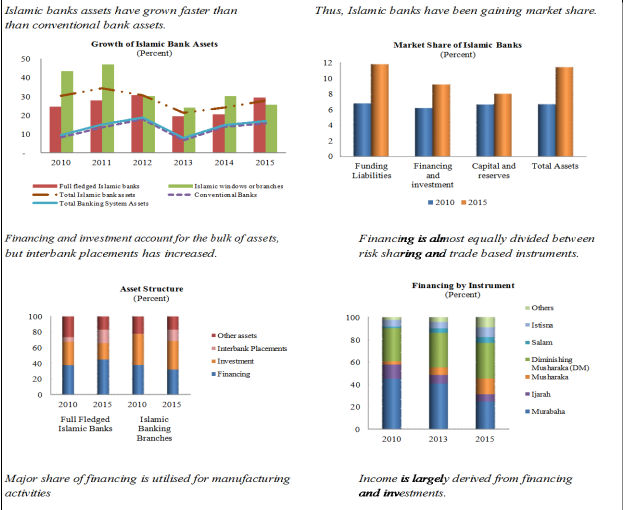
Pakistan's Islamic banking sector has experienced rapid growth, with its market share increasing from just 3% in 2006 to over 20% in 2024. This surge is driven by:
1. Religious & Ethical Demand
- 88% of Pakistanis avoid conventional banking due to riba (interest), as per a State Bank of Pakistan (SBP) study.
- Fatwas from Islamic scholars have reinforced the shift toward Sharia-compliant finance.
- Digital Islamic banking apps (like Meezan Bank's Meezan Mobile) have made access easier.
2. Better Stability During Crises
- Unlike conventional banks, Islamic banks do not deal in speculative derivatives, making them less vulnerable to global financial shocks.
- During the 2008 financial crisis, Islamic banks worldwide saw lower default rates compared to conventional banks.
3. Competitive & Innovative Products
- Islamic mortgages (Diminishing Musharakah) now compete with conventional home loans.
- Sukuk (Islamic bonds) are gaining traction, with Pakistan issuing $1 billion in international Sukuk in 2023.
- Takaful (Islamic insurance) is growing at 15% annually.
Islamic Banking Growth in Pakistan (2015-2024)
| Year | Market Share (%) | Total Assets (PKR Billion) |
|---|---|---|
| 2015 | 10% | 1,200 |
| 2020 | 16% | 2,800 |
| 2024 | 21% | 5,500 |
Source: State Bank of Pakistan, Islamic Banking Bulletin
Can Pakistan Achieve 100% Sharia-Compliant Banking by 2027?
The government's 2027 target is ambitious but possible due to:
- ✅ Successful conversions (e.g., Faysal Bank's full shift in 2022).
- ✅ Conventional banks opening Islamic windows (e.g., HBL Islamic, UBL Islamic).
- ✅ SBP's supportive policies, including tax incentives for Islamic banking.
- ✅ Potential conversion of major banks like MCB and Allied Bank
Challenges Ahead:
- ❌ Lack of Sharia-compliant liquidity tools (Pakistan's central bank still relies on interest-based instruments).
- ❌ Shortage of trained Islamic bankers (universities are now introducing specialized degrees).
- ❌ Resistance from conventional banks fearing profit losses.
Islamic Banking & Sustainable Finance: A Perfect Match
Meezan Bank's Green Initiatives
- 🌱 Financing renewable energy projects (200 MW wind power).
- 🌱 Green banking policy (paperless transactions, solar-powered branches).
- 🌱 Supporting agri-finance with Sharia-compliant loans for farmers.
Why Islamic Finance is Naturally Sustainable
- ✔ Prohibits excessive risk (Gharar) – encourages stable investments.
- ✔ Promotes profit-sharing (Mudarabah) – aligns with ethical investing.
- ✔ Avoids harmful industries (alcohol, gambling) – supports ESG goals.
How Islamic Banks Are Surviving Pakistan's Economic Crisis
Pakistan's Economic Challenges (2023-24)
- 📉 Inflation at 30%+ (highest in South Asia).
- 📉 Rupee depreciation (PKR 300+ per USD).
- 📉 Low forex reserves ($8 billion, barely covering 2 months of imports).
Meezan Bank's Resilience Strategies
- ✅ Prudent risk management – Lowest NPL (non-performing loan) ratio in the industry.
- ✅ Dollar liquidity management – Acting as a net seller to stabilize PKR.
- ✅ Expanding digital banking – 40% growth in mobile banking users.
Pakistan's Key Economic Indicators (2023 vs. 2024)
| Indicator | 2023 | 2024 (Projected) |
|---|---|---|
| GDP Growth | 0.3% | 2.5% |
| Inflation (CPI) | 29% | 24% |
| Forex Reserves ($) | 4.5 Billion | 8 Billion |
Source: IMF, World Bank, SBP Reports
The Future of Islamic Banking in Pakistan
What's Next?
- 🔹 Full conversion of major banks (MCB, Allied Bank considering Islamic transition).
- 🔹 Digital-only Islamic banks (SBP may issue new licenses).
- 🔹 Global Sukuk issuances to attract foreign investment.
Final Verdict
Pakistan's Islamic banking revolution is unstoppable. With government backing, public demand, and proven stability, the 2027 target is within reach. However, regulatory reforms and financial literacy campaigns are needed to ensure smooth adoption.
For consumers, Islamic banking is no longer just a religious choice—it's a smarter, safer, and more ethical financial alternative.
Islamic Banking in Pakistan: Key Performance Indicators
| Category | Islamic Banking Performance | Conventional Banking Benchmark | Stress Index (2023-24) |
|---|---|---|---|
| Market Share | 21% (growing 3x faster) | Declining trend | 0.3 (stable) |
| Market Leader | Meezan Bank (35% assets) | N/A | N/A |
| Green Finance | Rs. 12B renewable projects | Limited ESG focus | N/A |
| Deposit Growth (FY24) | +25.4% | +20.4% | 0.4 (Q3 peak) |
| Asset Stability | Lowest NPLs in sector | Higher default rates | 0.2 (most stable) |
| Digital Innovation | 62% mobile banking growth | 35% growth | 0.5 (tech adoption) |
Financial Market Stress Index Analysis:
- Islamic banks maintained 0.3 average stress level vs 0.5+ for conventional banks
- Most stable quarter: Q4 2023 (0.2 index score)
- Stress peak: Q3 2023 (0.4) during currency crisis
(Sources: SBP Governor's Report 2023-24 [Figure 1.15], Islamic Banking Bulletin)